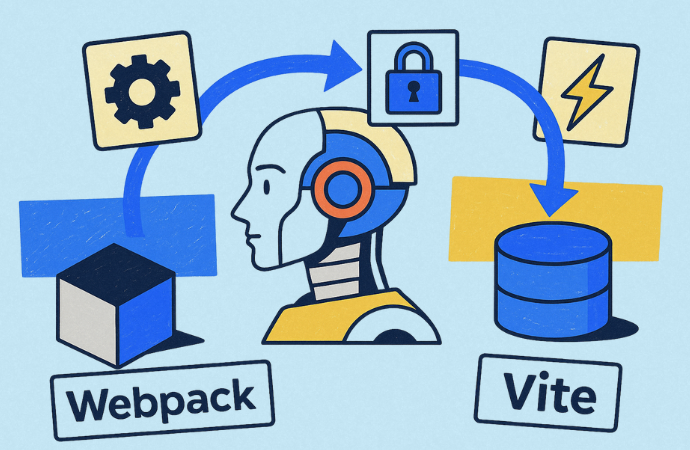
Behind the Curriculum: Why We've Migrated from Webpack to Vite

.png)


We have officially transitioned from Webpack to Vite across its Software Engineering + AI/ML Immersive.
This move reflects a broader shift in the JavaScript ecosystem toward tools that emphasize speed, simplicity, and intuitive developer experience.
Vite’s zero-config setup, built-in TypeScript support, and faster dev server reduce unnecessary complexity, allowing residents to focus on mastering problem-solving and deeper technical concepts rather than configuration struggles.

Eight years ago, Codesmith residents added a new tool to their toolbelts.
Many in the spring cohort that year would have already heard about React: the JavaScript library they’d use to craft dynamic & reactive web applications, but very few likely realized that they would find it a lot easier than previous cohorts in the Software Engineering Immersive. That’s because starting in 2018, Codesmith introduced webpack into the core curriculum as our primary build tool.
In so many ways, webpack is a fantastic tool, well-suited for the job of bundling JavaScript and orchestrating any parsing or transpiling necessary before sending it off to the browser. Since it was first released in 2012, webpack has become a central part of the JavaScript ecosystem and many, many applications still rely on it in 2025. (Just ask the folks over at Vercel, where webpack still sits at the foundation of their popular meta-framework Next.js.)
So why would we now choose to migrate our internal systems from webpack, stop teaching Codesmith residents how to write a webpack.config.js, and instead shift our attention to a brand new build tool?
Even more rapidly than webpack asserted itself in the previous decade, Vite is now fundamentally transforming the way that we build for the web. Many of the most-used UI libraries & frontend frameworks now point to Vite as their recommended integration method, and it has wildly high retention rates among developers who have tried using it. In an ecosystem as fragmented as JavaScript’s, this is a relatively rare, industry-wide sea change.
Many of the reasons behind this change are straightforward. Vite is both wildly fast (both when bundling for production and when running its built-in development server) and comes ready for TypeScript, JSX & ESM by default, with no added configuration necessary. (This is a huge benefit for our residents, as they begin exclusively writing TypeScript starting on Day 3 of the Engineering Immersive.) And with hot-module replacement and a plugin system fully compatible with Rollup’s extensive archive, it’s obvious that Vite is really cooking!
But all these are features you could read about on Vite’s splash page. The more interesting aspect of integrating Vite into the immersive curriculum is how it exemplifies a more fundamental pattern in interface design and managing software complexity.
In A Philosophy of Software Design, Stanford professor of computer science John Ousterhout describes complexity as ”anything related to the structure of a software system that makes it hard to understand and modify the system.” For residents at Codesmith, this type of wicked complexity manifests both in the libraries we work with, where overly complex APIs can stymie even the quickest learners; and in the code we write ourselves, where you sometimes find that the engineer whose unfathomable decisions have been slowing you down is none other than… you. In both of these cases, our residents learn the hard way how to first push through complexity and then how freeing it feels to build with a thoughtfully-designed interface.
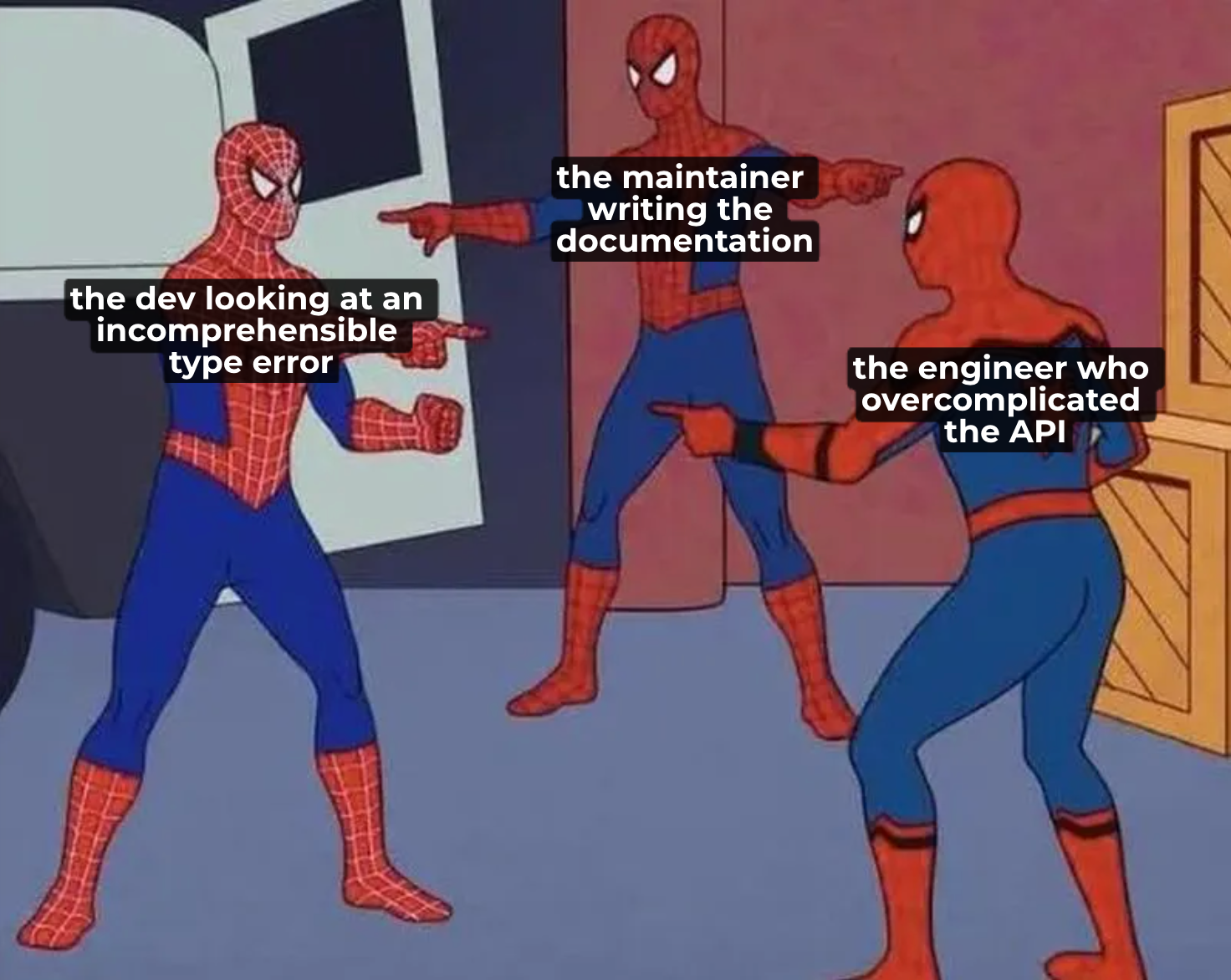
One of Ousterhout’s many critical insights is that there is a clear and inextricable connection between the overall complexity of a system and the depth of its interfaces. Complexity creeps into our programs along many paths, but we can aspire to build systems that provide deep functionality and solve difficult problems while only requiring a minimum amount of expertise from their users. In Ousterhout’s words:
“The best modules are those that provide powerful functionality yet have simple interfaces.”
But Marselena, what does this have to do with Vite?
Both webpack and Vite provide deep functionality; they solve many difficult problems for many web developers. Yet Vite manages to accomplish just as much as webpack while exposing an interface that is much narrower. To use webpack, developers often have to accumulate a significant amount of expertise in the intricacies of its API, spending time installing purpose-built loaders and writing a tailor-made configuration to achieve the minimum functionality necessary for developing and bundling a modern web application. Meanwhile, devs often find they’re able to get up and running with Vite without changing its default configuration much at all due to its “sensible defaults” and the design philosophies of its creator, Evan You.
For our residents at Codesmith, this means that they’re now at once able to learn from Vite’s example AND take advantage of the time saved, allowing Vite to handle the details while they move on to solving more interesting problems. True, some might argue that that time spent wrestling with webpack’s configuration file is a valuable learning opportunity that we now deny them in favor of an easier path. We espouse “hard learning” at Codesmith, don’t we? So why make the learning easier here? Simply because not all struggle is equally valuable.
In a fast-paced program like the Engineering Immersive, fighting with webpack’s configuration file very quickly turns out to be one of the least valuable ways that a resident could spend their time. In the time it takes one resident to configure their development environment, another might have a breakthrough in understanding a UI library’s render cycle or learn the hard way how valuable robust error handling is while debugging their backend API. And that in turn means that my role as an educator is not only to ensure that Codesmith residents’ time is dense with struggle but also to guide them towards the challenge that’s most valuable for them to overcome at this particular moment.
So from here on out at Codesmith, it’s Vite all the way. For those interested in learning more about the history of Vite’s project to unify the JavaScript toolchain I’d recommend Vite: The Documentary from CultRepo. And if you’ve made it this far, thanks for reading! You can look forward to more thoughts from me on how I'm thinking about teaching tech in the future. Until then, happy coding! 👋
.png)

Explore CS Prep further in our beginner-friendly program.
Get more free resources and access to coding events every 2 weeks.

Connect with one of our graduates/recruiters.

Our graduates/recruiters work at:


Marselena is a Lead Engineering Instructor & Head of Curriculum at Codesmith, where she’s able to combine a lifelong commitment to teaching and a deep love for listening to herself talk. As an engineer, she’s passionate about open-source tools for local community and designing software that’s both beautiful and useful. As a teacher, she believes that we can learn more through collaboration than we can through competition. She also loves birdwatching, reading fantasy novels, settling into a good puzzle game, sitting under a big tree, cooking Puerto Rican food, and taking a deep breath - although you can usually just find her on a walk to the library. She lives with her dog Chico in Lenapehoking.


Connect with one of our recruiters to learn about their journeys.
Our graduates/recruiters work at:


Copyright @ 2025 Codesmith | All Rights Reserved
Terms and ConditionsPrivacy PolicyRegulatory Information