

Build your
AI Engineering Force
From AI Tool Adoption to Measurable Impact in Enterprises and Governmental Agencies.
Engineers get certified in AI systems, benchmarked against production-grade standards.

The Enterprise AI Gap No One Has Solved
But everyone is feeling
You’ve invested effort, money and time in:
Buying all the AI tools and licenses
Running AI pilots
Workshops and
tool demos
AI strategy decks from consultants
But you are not seeing the expected ROI and your output hasn’t increased 10x.

Tools change.
Human Capacities endure.
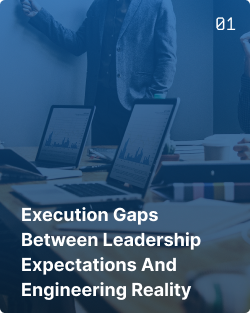
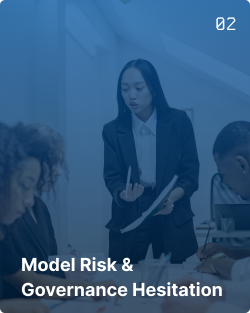
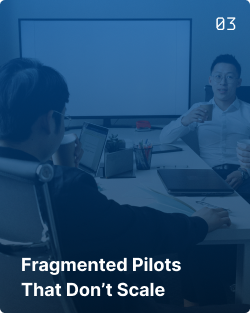
Most organizations face the following challenges:

HeadingWhy should your organization embrace
AI-first engineering capabilities building?
01
AI workflows that reduce build cycles, refractory time and debugging loops.
Increased output velocity
02
Lower reliance on consultants for architecture decisions and AI integration.
Reduced external dependency
03
Secure LLM orchestration and risk-managed production builds at scale.
Scalable deployment
04
Instead of one successful pilot, you create internal authorities who multiply and compound impact.
Permanent capability shift
05
Engineers complete a rigorous production-grade assessment and earn formal certification, validating their world-class capability.
AI Engineering Certification
What we do
building 10x AI Engineers
To support this change, Codesmith is building the AI architects who will power the reindustrialization of enterprises and governments in the age of artificial intelligence.
Codesmith builds engineers with:
Deep “under-the-hood” mastery
AI-first workflows
Production-grade system ownership
Security and governance alignment
We transform generalist engineers intoAI system architects capable of:
Modern scalable backend architecture
Secure LLM orchestration
RAG pipelines & vector DB implementation
Agentic workflows
Automated refactoring
Stack-aligned production builds
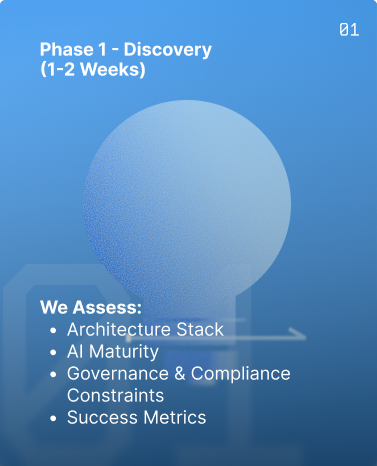
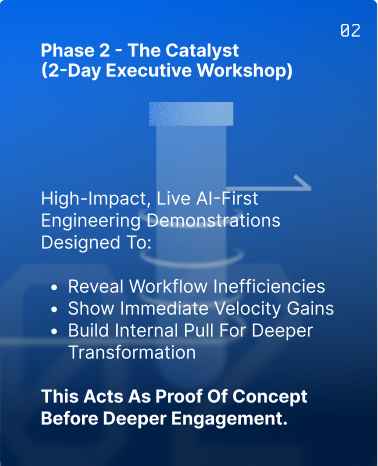
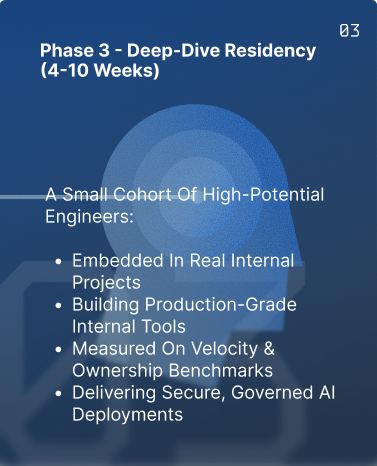
How we work




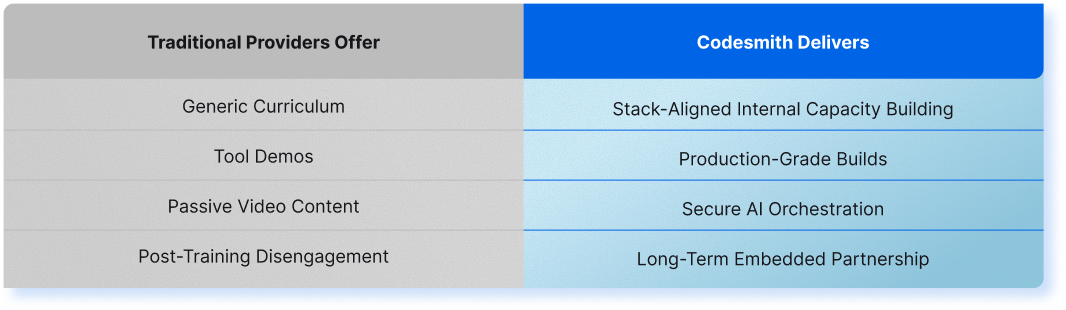
Why Codesmith
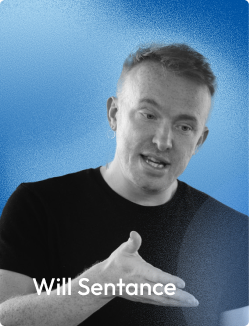
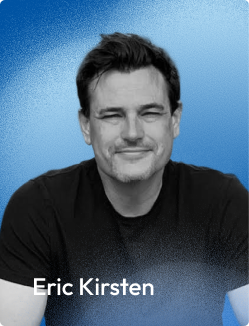
leadership
engineering led by engineers

Let’s Build Your AI Engineering Force
If you are a CTO responsible for AI ROI, a CIO accountable for modernization, a Head of Engineering under pressure to deliver, or a Chief AI Officer tasked with scaling pilots, you can book an Executive Discovery Call.
In 30 minutes, we’ll map your AI maturity, identify execution bottlenecks and outline a transformation patch.


